At the age of 50, Anna Zemánková’s life took a turn when her children discovered her old drawings tucked away in a suitcase. Born in 1908 in Olomouc, Moravia, Zemánková had shown an early passion for art, but her family discouraged her, steering her toward a more practical career as a dental technician. She later married a military officer, and after the Second World War, the family relocated to Prague, where she devoted herself to raising her children. For years, her love for art remained in the background—until, in her early 50s, facing depression and severe health struggles, including the eventual amputation of both legs due to diabetes, she found herself drawn back in. Her children’s discovery reignited her interest, and with the support of her son—an artist himself—who provided her with art supplies and a drawing table, Zemánková began a daily practice of spontaneous drawing.
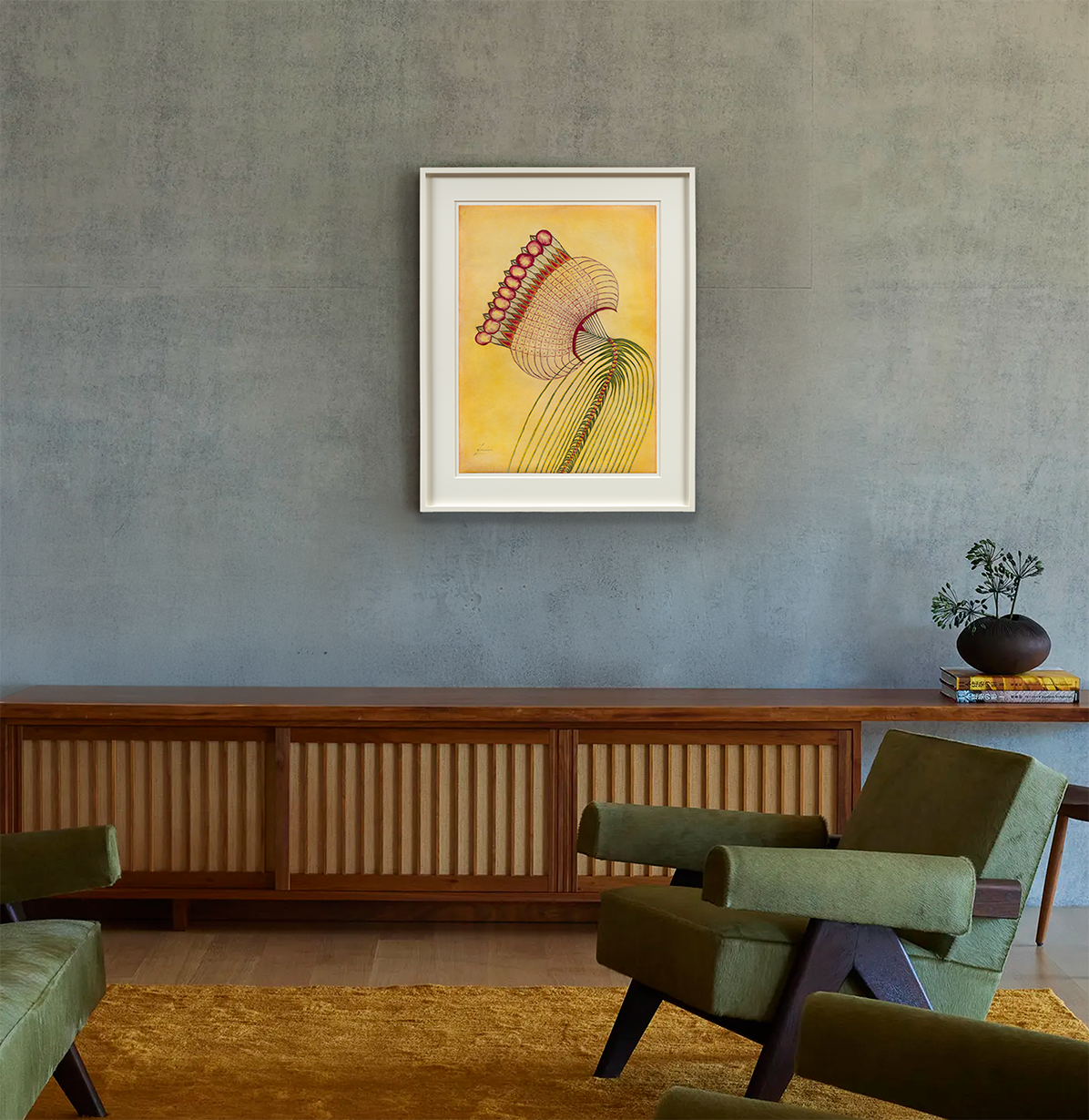
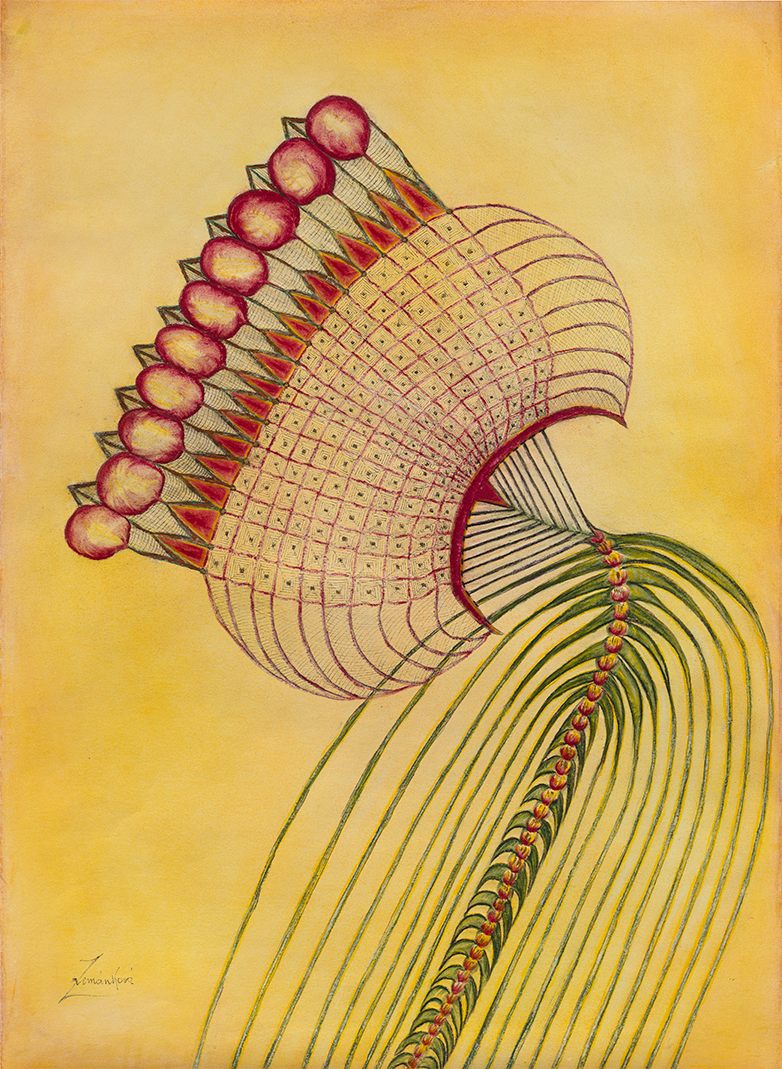
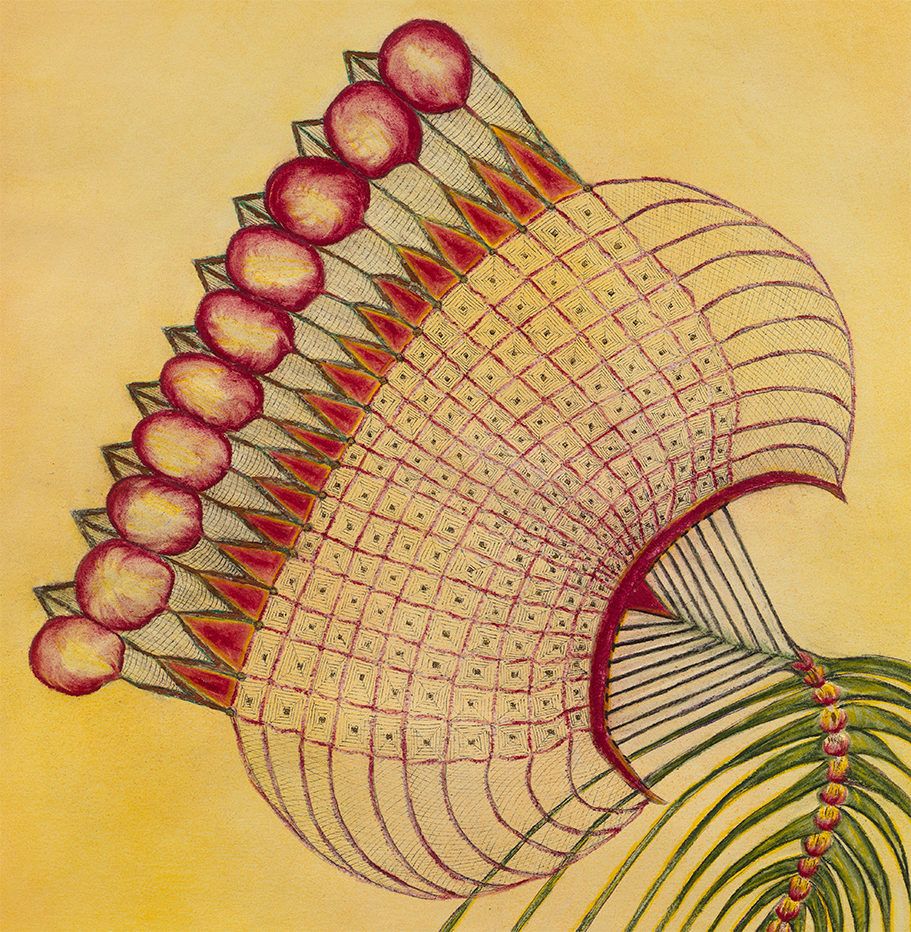
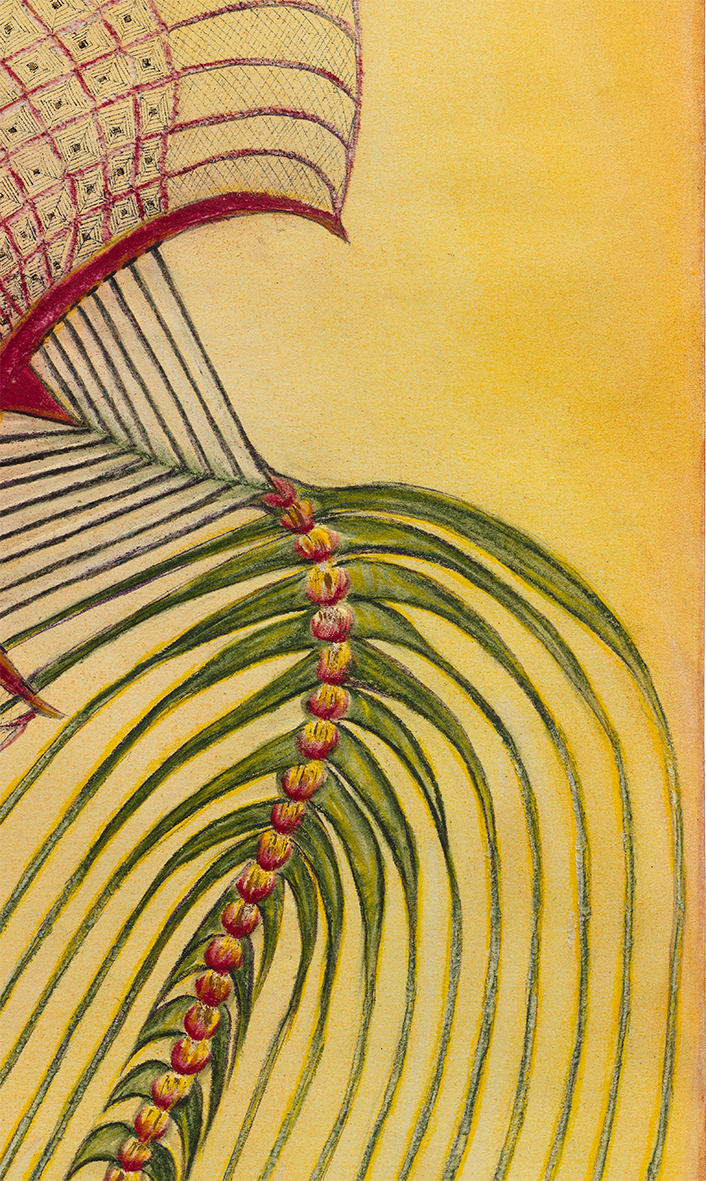
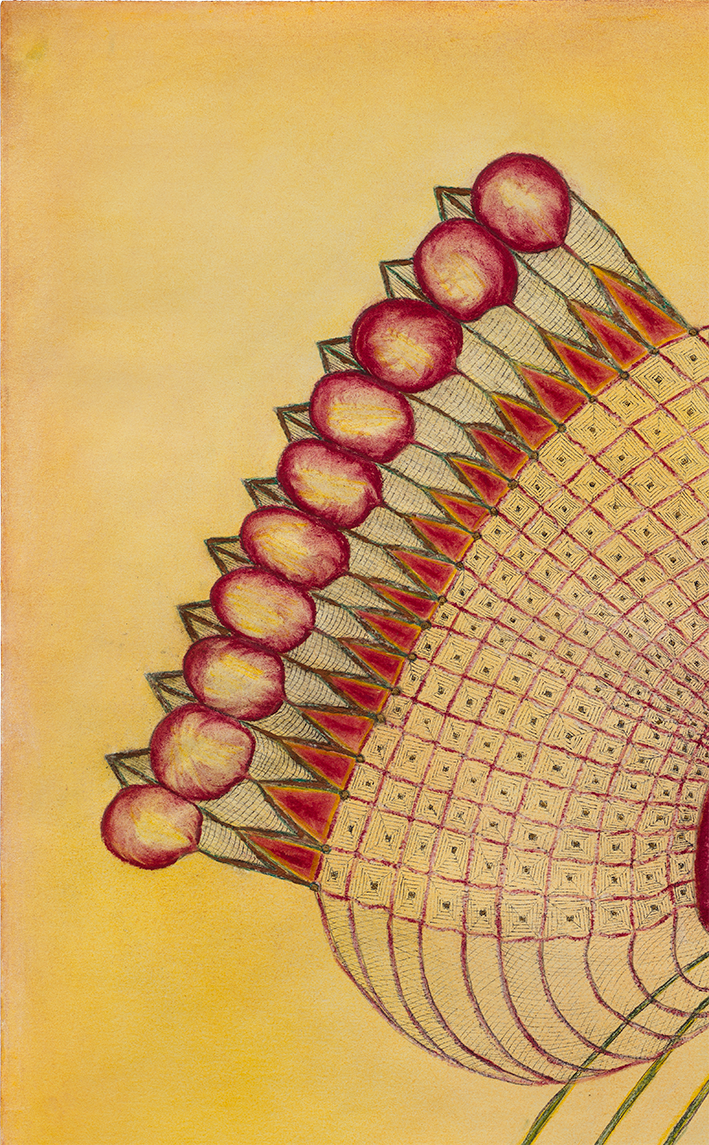
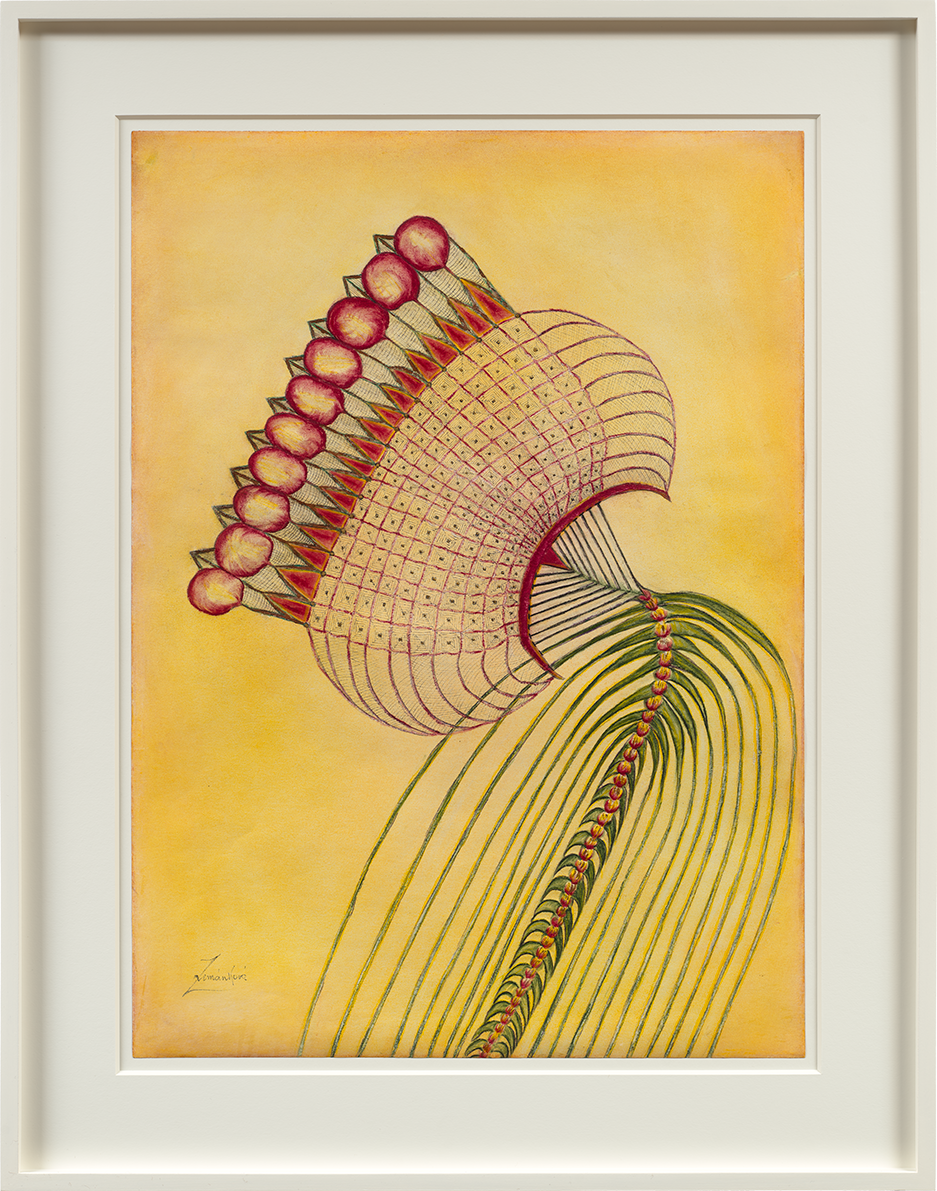
Resembling an otherworldly herbarium brimming with fantastical plants and unknown flora, Zemánková’s drawings reflect a sophisticated inner vision and deeply personal artistic language. Capturing the singular, dreamlike nature of her creations, Zemánková once explained, “I grow flowers that grown nowhere else.” Her creative process was both intimate and ritualistic. She would wake before dawn, listen to classical music, and begin drawing in a trance-like state, hovering between sleep and wakefulness. With rhythmic precision, she traced loops with her ballpoint pen, forming curvilinear floral shapes that seemed to grow and twist across the page.
Starting with pencil sketches, she would build layers using tempera paints or pastels, gradually adding ornamental details with extraordinary precision. Over time, she expanded her techniques to include paper and textile collages, crochet applications, and incorporating beads and sequins—materials she had previously used to decorate her home and clothing. This fusion of traditional craft and spontaneous artistry resulted in compositions that pulse with life, their undulating forms and intricate embellishments evoking a sense of movement and organic growth.
Despite beginning her artistic career later in life, Zemánková gained recognition for her work. She first exhibited her pieces among a circle of friends and artists in Prague during the 1960s—a bold endeavor given the restrictions of the Soviet era. In the absence of gallery shows, she hosted “open house” exhibitions every few years, gradually attracting attention. Her art eventually caught the eye of Jean Dubuffet, who included several of her works in the Collection de l’Art Brut in Lausanne, solidifying her place within the Art Brut movement.
Today, Zemánková is widely recognized as a key figure in Art Brut. She was honored at the Venice Biennale in 2013, and her work has since entered the collections of major institutions, including the Centre Pompidou and, in 2020, the Museum of Fine Arts in Boston. Last year, her art returned to the Venice Biennale for a second time, celebrating the theme Foreigners Everywhere under the curatorship of Adriano Pedrosa.
Critics have praised her "incandescent botany," describing her work as a dizzying interplay of shapes and forms that challenge the viewer's perceptions and invite them into the artist’s dreamlike realms. Zemánková’s art transcends physical reality, offering an immersive experience that bridges the natural and the fantastical. Her legacy endures not just as a visionary artist but as one who has reclaimed her creative voice and transformed her inner world into something both deeply personal and universally resonant.