After years of experimenting with Dada and abstract techniques, the French Surrealist Francis Picabia embarked on a “painterly renaissance” in the late 1920, declaring: “I want a painting where all my instincts may have a free course.” His celebrated Transparences series — which derives its name from the multiple layers of overlapping imagery — does exactly that.
Rooted in photography, Picabia’s use of the term “transparency” signaled the spiraling, almost hallucinatory, visual effects of the montaged imagery that appears throughout the series.
While Picabia had previously explored the optical effects of multiple layers of imagery in his Cubist and Orphist periods, as well as in his preceding Monster paintings and in his 1924 film Entr’acte, Marcel Duchamp celebrated Picabia’s paintings for their ability to 'express the feeling of a third dimension without the aid of perspective.’
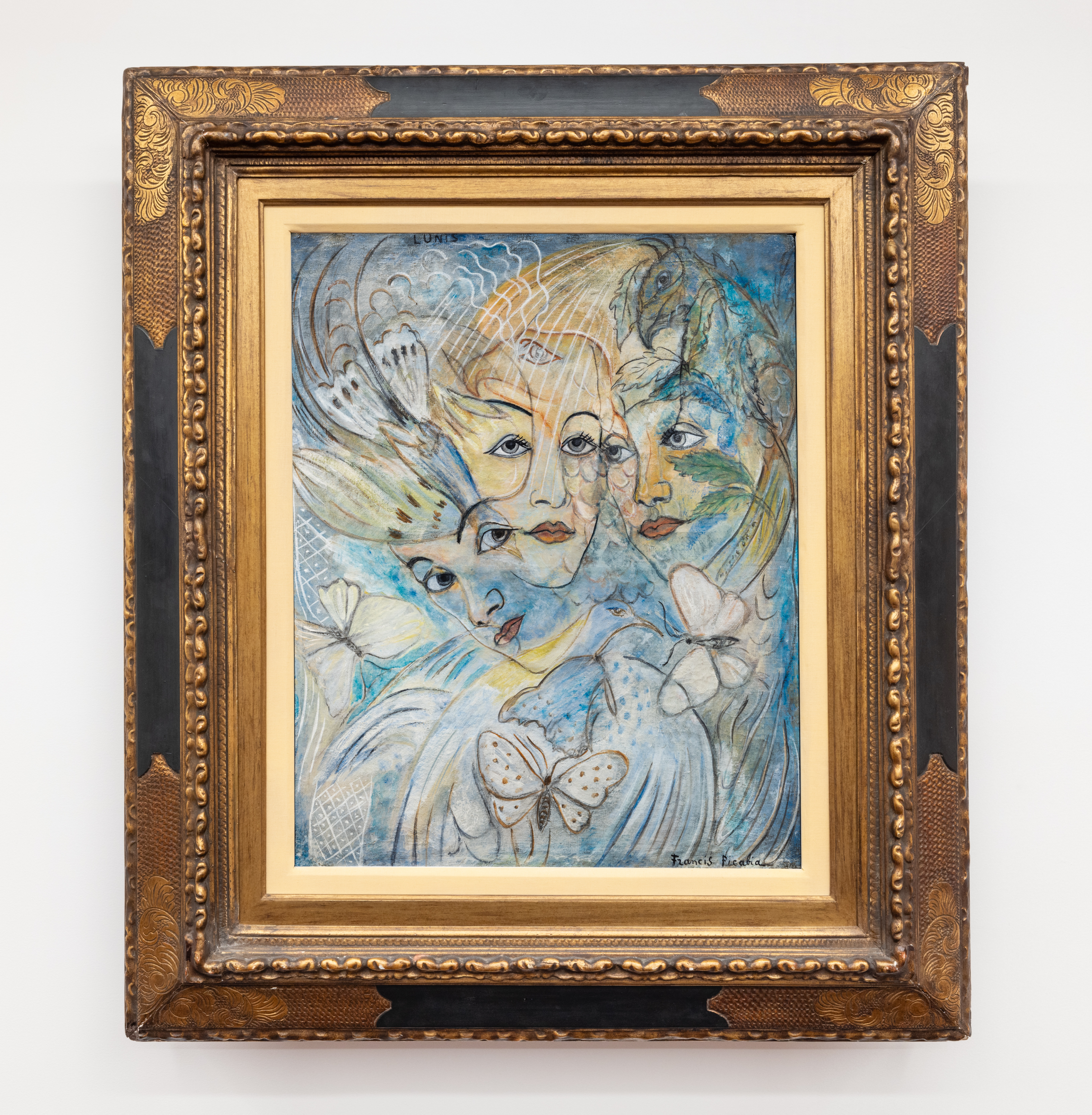
“This third dimension, which is not a product of chiaroscuro,” Picabia described of his layered gossamer-like series, “these transparencies with their secret depth, enable me to express my inner intentions with a certain degree of verisimilitude.” Reduced to bold sinuous lines, Picabia’s motifs are intermingled and superimposed upon one another, leading the eye from one dimension to another without the assistance of transitional perspective.
Created while the artist was living in the South of France, the Transparences seem to fuse the elegance and beauty of the Mediterranean’s Classical past with the hedonistic lifestyle offered by the modern resorts on the Côte d’Azur.
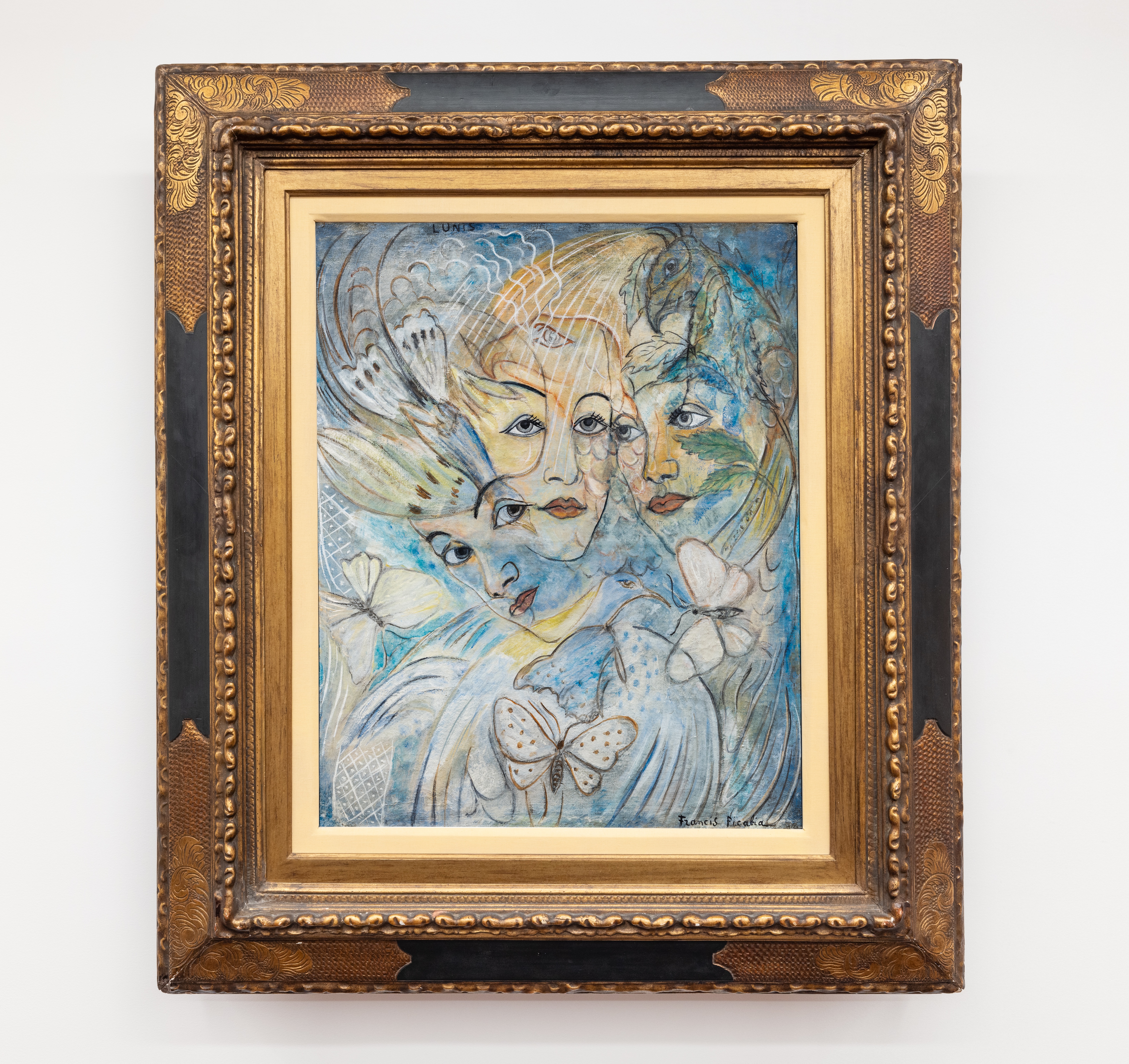
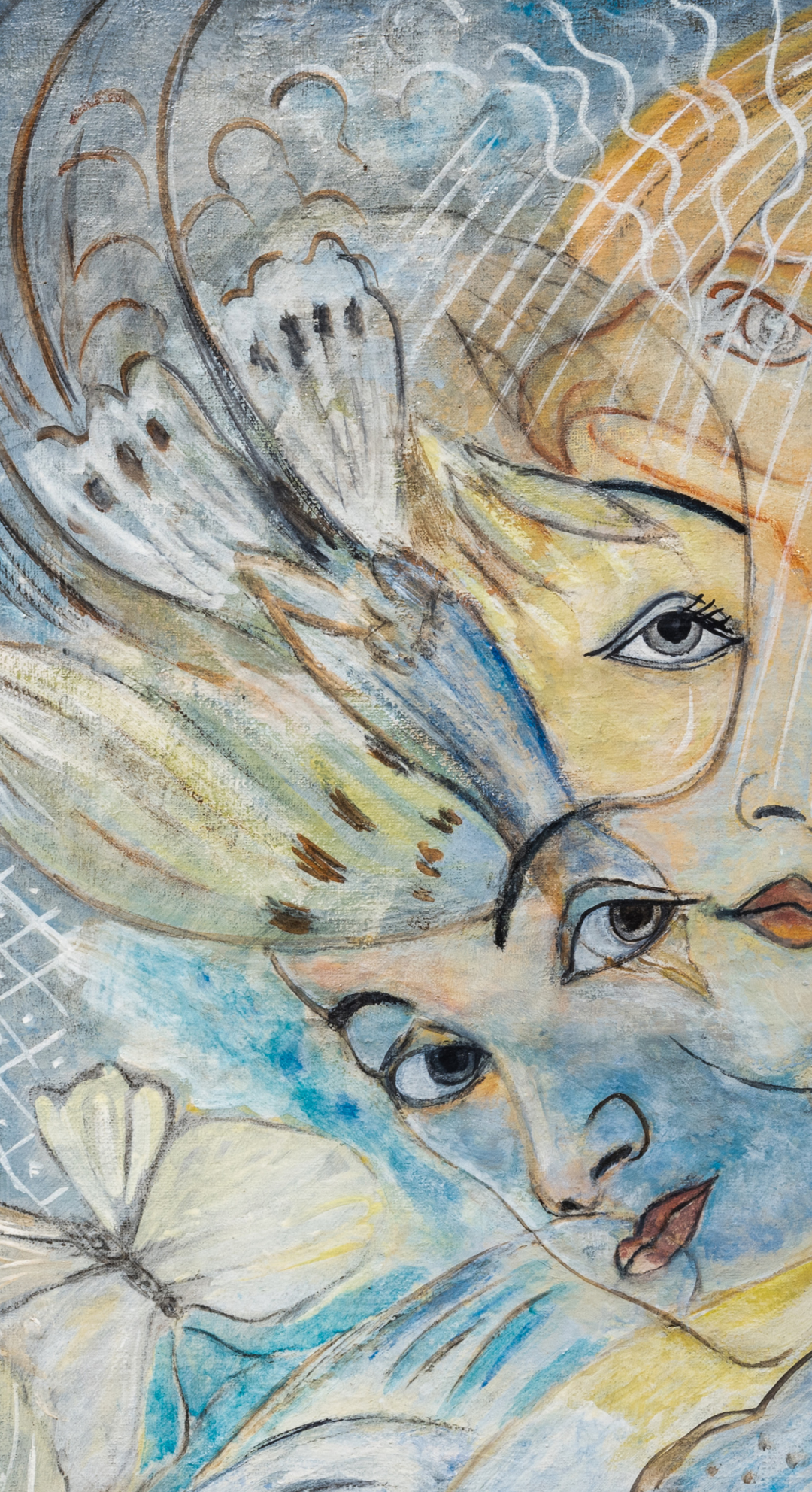
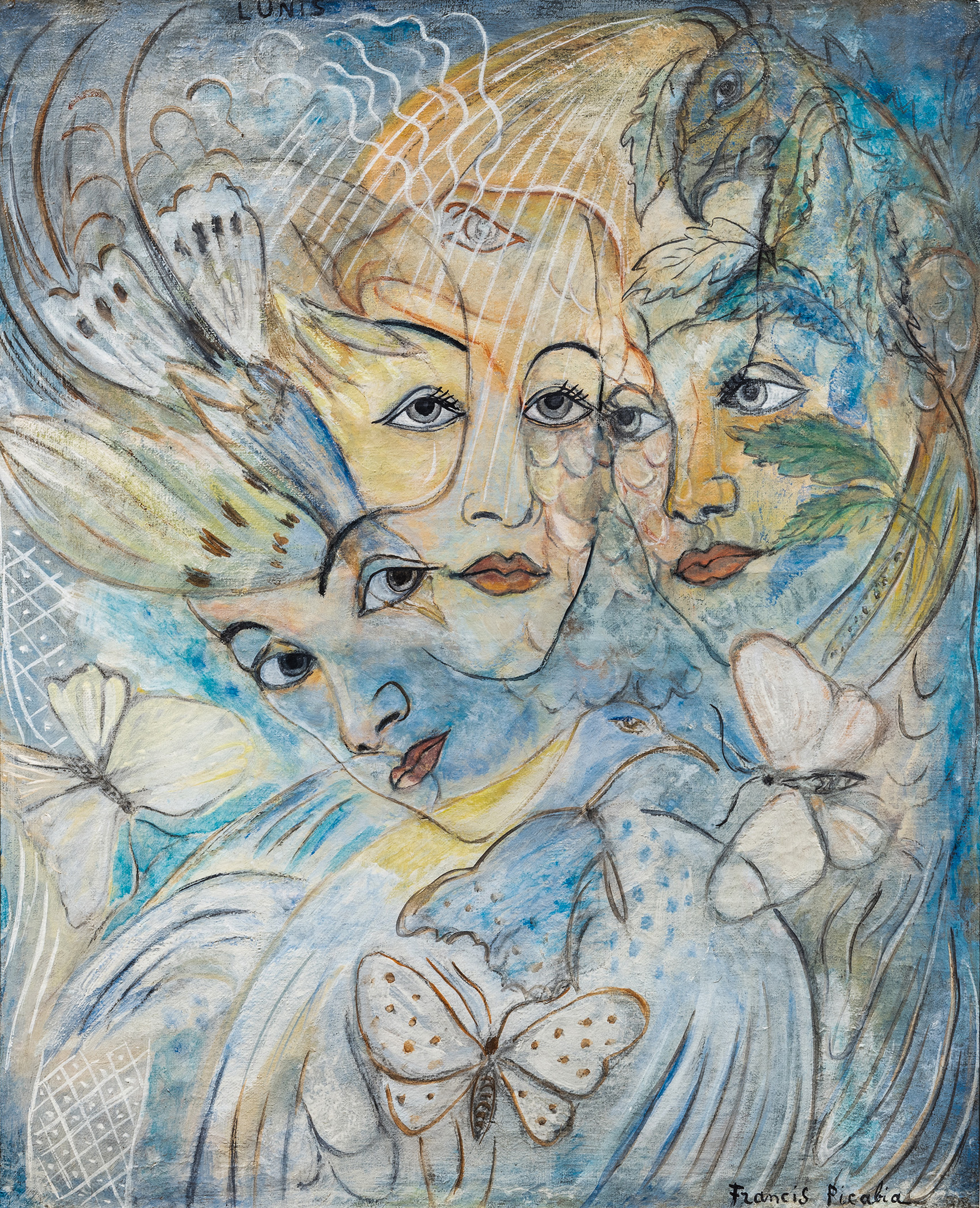
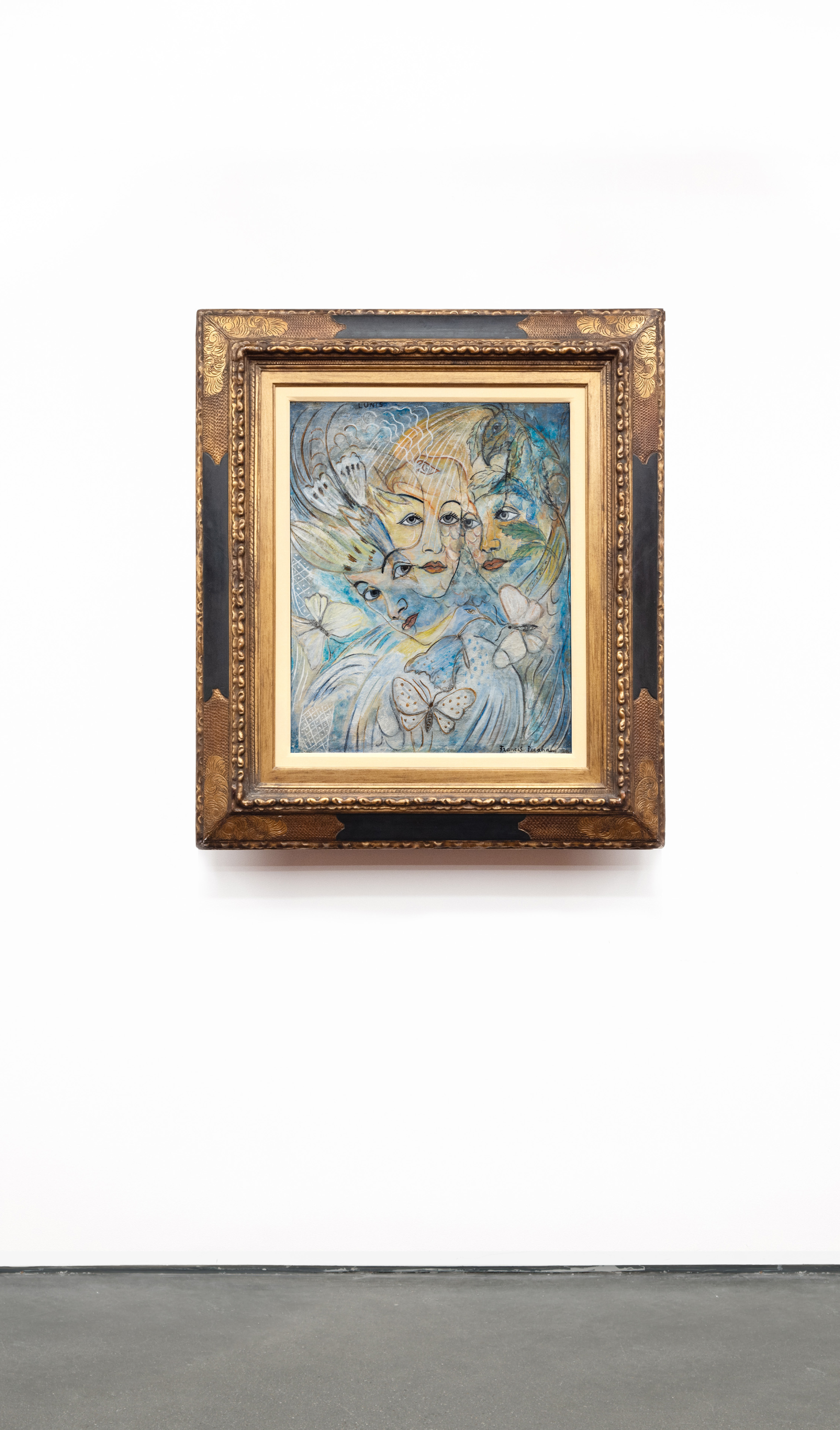
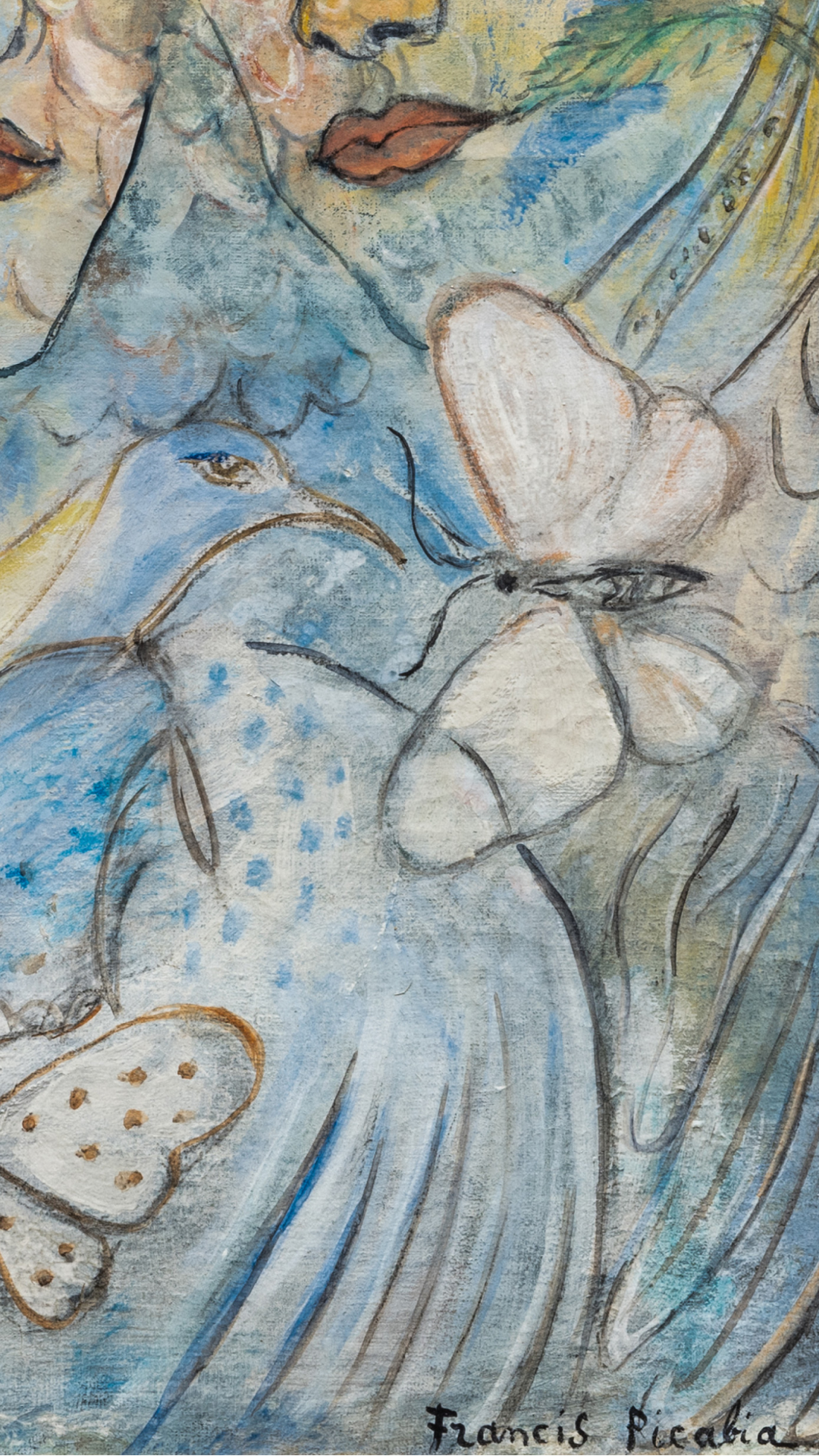
In his Transparences, Picabia often chose titles evocative of Biblical characters and Greco-Roman mythology. In the majority of the cases, as with the present work Lunis, they were inventions of his own taken from the Atlas de poche des papillons de France, Suisse et Belgique by Paul Girod. This small volume, found in the artist’s library, also explains the motif of butterflies in the present work.
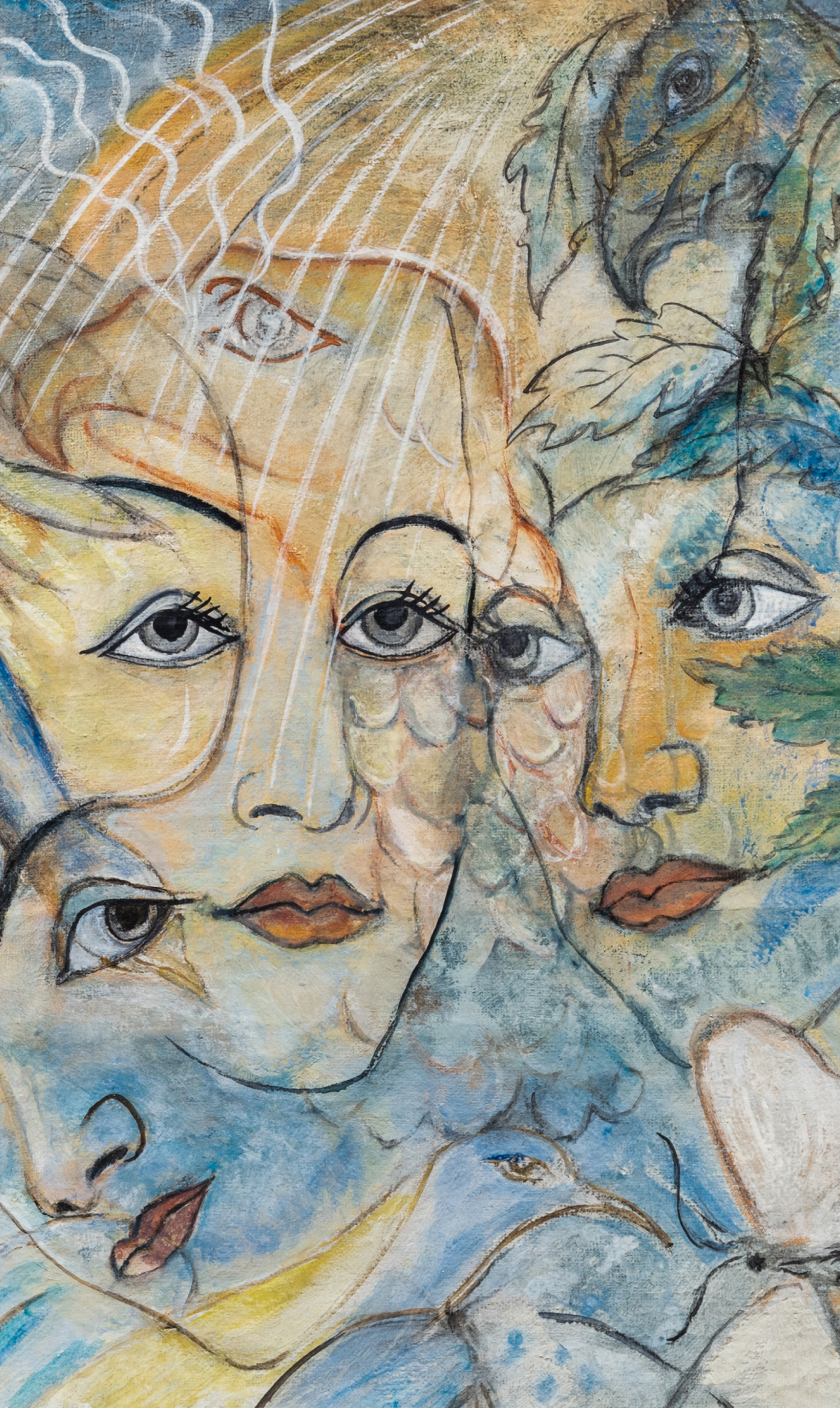
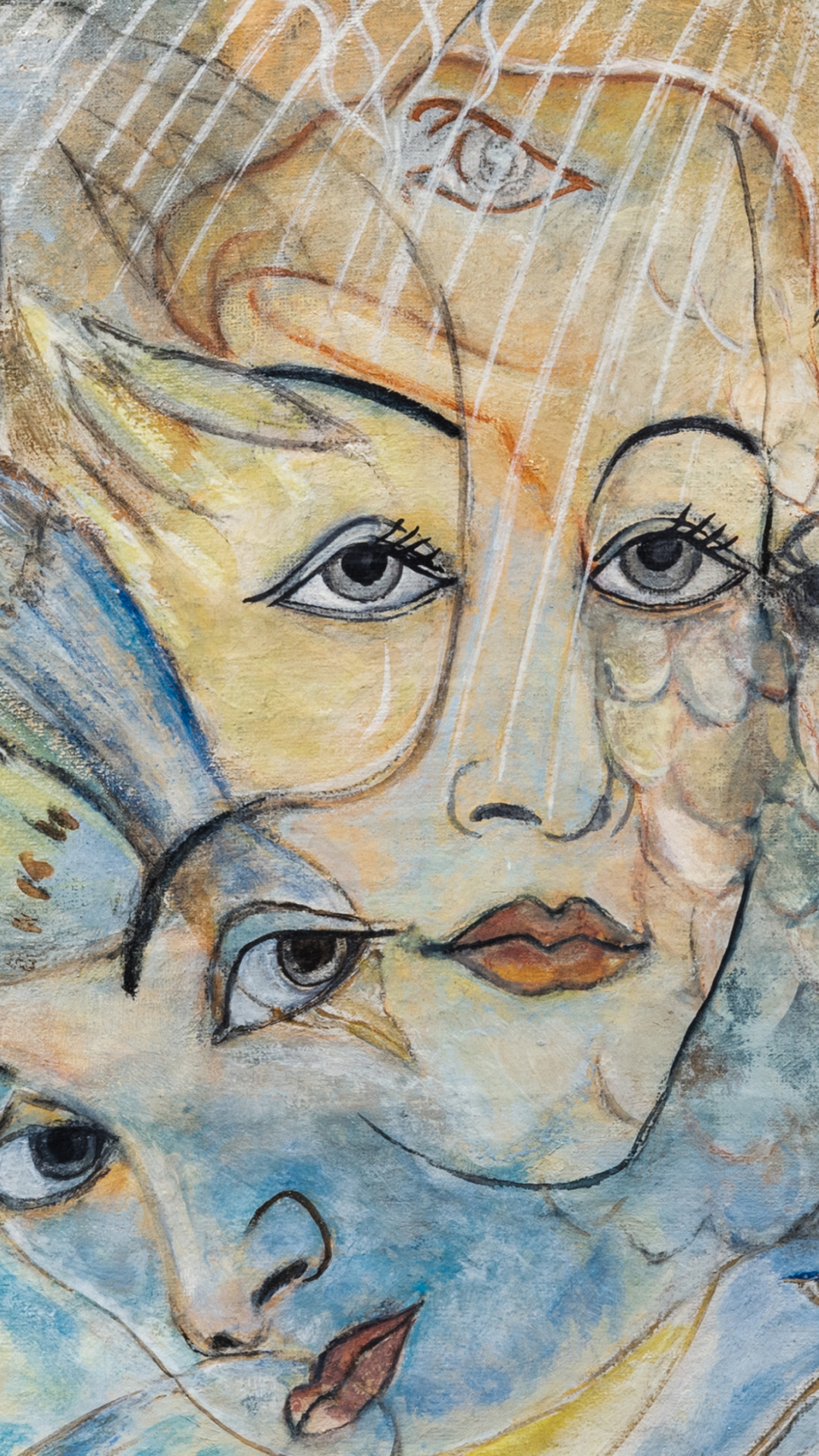
In Lunis, flora and fauna spiral around three female faces. While the female figures immediately recall the Classical portraiture that Picabia had, at the time, immersed himself in, from Botecelli’s Primavera to Émile Vernon’s Three Grace, the exotic birds, butterflies and foliage coalesce into a dizzying celebration of the subconscious.
Drawing on sources ranging from antique sculpture and Renaissance painting to natural phenomena, Picabia’s Transpareneces are a visual enigma — an iconographic puzzle that perhaps only the artist himself could recognize and interpret.
His novel appropriation and subversion of the art of the past to create these personal dream-like worlds became a response to what he felt was the increasing monotony of much modern art. In this, the Transparences foreshadow techniques employed by many Postmodern artists of the latter half of the 20th century and were to profoundly influence the work of the contemporary painter and photographer Sigmar Polke.